11 Essential Art Styles to Know
By Mason Cooper
//
11 Essential Art Styles to Know
September 19, 2024By Vinay Sane, Merging Synergies, 2026.
An art style describes the visual elements that define how an artwork appears, offering a window into the artist's creative process. It can also reveal their vision, subject matter and emotions expressed on canvas or through other mediums.
Building on the rich legacy of historical art movements such as Surrealism, Abstract Art, and Pop Art, among others, today's art styles incorporate influences from these movements while introducing new approaches.
In this article, we outline 11 essential contemporary art styles and their characteristics, providing examples to help you understand what to look for, and purchase art that resonates with your taste and personal connection.
Abstract art does not aim to provide an accurate depiction of reality. Instead, it uses elements such as shapes, colors, forms, and gestural mark-making either to capture the essence of objects or to create art that has no direct connection to reality.
What makes Abstract art so highly sought after is its freedom of form, allowing viewers to interpret the works individually and personally. This style is characterized by its subjectivity and non-representational nature, with no recognizable objects.
By
Quick LookBy
Quick LookBy
Quick LookBy
Quick Look
Abstract Expressionism was a movement that emerged in the 1940-50s, led by American painters such as Jackson Pollock (1912-1956) and Mark Rothko (1903-1970). It introduced a new form of abstract art characterized by either gestural and expressive brush strokes (known as the “Action Painters”) or large, flat areas of single color (known as the “Color Field Painters”).
Based in New York (sometimes referred to as the New York School), Abstract Expressionists sought not only to create abstract works but also express emotion and spontaneity through their brush strokes. Today, a new generation of contemporary artists is building on the legacies of Pollock and Rothko, infusing this genre with new ideas and interpretations.
By
Quick LookBy
Quick LookBy
Quick LookBy
Quick Look
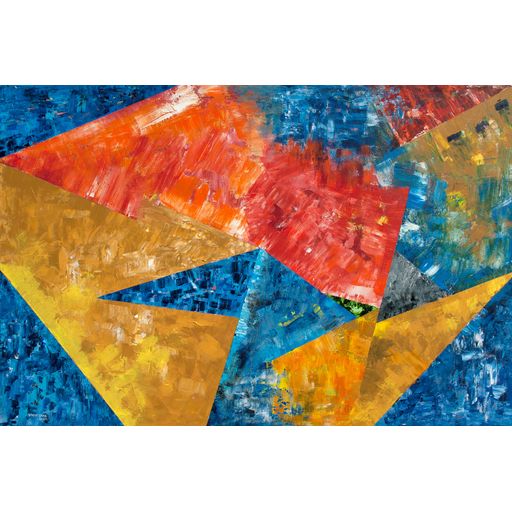
Geometric art employs geometric forms created from points, lines, angles, and shapes, ranging from simple triangles, squares, and circles to complex figures that may involve mathematical precision. Unlike natural and organic forms, geometric shapes emphasize precision and often require tools such as straightedges or compasses.
By
Quick LookBy
Quick LookBy
Quick LookBarricada 14 AIP S45By
This art style focuses on the realistic representation of humans, animals and objects derived from actual sources. In contrast to abstract (or non-representational) art, figurative artworks continue to hold a prominent place in the contemporary art world. While human and animal figures are common subjects, figurative art differs from figure painting, which specifically represents the human form.
By
Quick LookBy
Quick LookFully ProtectedBy
By
Quick Look
Minimalism as an art movement originated in the United States during the 1960s. One of its most influential figures, Frank Stella (1936-2026), described art from the movement as 'what you see is what you see,' emphasizing that art should only refer to itself. Minimalist artists de-emphasized personal expression, placing the art itself at the forefront. They challenged viewers to engage directly with the reality of the artwork, its medium, and its materials.
By
Quick LookBy
Quick LookBy
Quick Look
The Pop Art movement reached its height in the 1960s as a reaction against traditional approaches to art and culture. Artists turned to visual elements from advertising, music, comic books, and product packaging—imagery designed for mass consumption. By incorporating these familiar images into an artistic context, Pop Art challenged the distinction between "high" art and popular culture.
Today’s Pop artists continue to build upon the works of pioneers like Roy Lichtenstein (1923-1997) and Andy Warhol (1928-1987), adapting to contemporary trends while retaining the movement’s original focus on the intersection of art and popular culture.
By
Quick LookBy
Quick LookBy
Quick LookBy
Quick Look
Surrealism is a movement that began in the 1920s, heavily influenced by psychoanalysis as artists sought to explore the subconscious and unconscious mind. Surrealist artists often interpreted dreams and memories through irrational imagery, creating alternate realities that defied logical thought.
Contemporary artists today continue to embrace this ethos, invoking the uncanny and exploring current psychological themes. The resurgence of Surrealism in the art world is marked by a renewed interest in these themes, with contemporary artists pushing the boundaries of its aesthetics and exploring modern concerns in their work.
By
Quick LookBy
Quick LookBy
Quick LookBinding A DreamBy
Also known as superrealism, hyperrealism in paintings, graphic art and sculpture are extremely true-to-life and often indistinguishable from high-quality photographs. While it shares similarities to photorealism, hyperrealism incorporates a noticeable narrative or emotional element.
With the advancements in photographic technology, artists are able to use high-resolution photographic references to create incredibly detailed works in genres such as portraiture, landscapes and still life. Hyperrealism has become an important part of today’s contemporary art scene, with exhibitions in this style attracting large crowds and attention.
By
Quick LookBy
Quick LookWolfBy
By
Quick Look
In 1874, an exhibition in France was held in defiance of the state-sponsored Salon, featuring artists such as Claude Monet, Edgar Degas and Paul Cézanne. Their work was mocked as unfinished “impressions”, coining the term that would define the Impressionist movement.
Breaking the artistic conventions of the time, these artists used unblended colors, loose brushwork, and plein air techniques to capture scenes at specific moments. The legacy of the original Impressionists lives on today, with contemporary artists continuing to use these techniques to convey the sense of a fleeting moment.
By
Quick LookBy
Quick LookBy
Quick LookBy
Quick Look
Text art has its roots in the early 20th century and saw a surge in popularity during the 1960s, particularly within movements like Conceptual Art and Pop Art. This style elevates words to the level of visual art, with artists using various techniques such as typefaces, hand-drawn text, and materials like neon signage to express themselves. Text art often conveys powerful messages, frequently addressing socio-political issues or exploring the relationship between language and meaning.
By
Quick LookBy
Quick LookBy
Quick Lookcut-out stars no.128By
Cubism began in Paris in the early 20th century and became a movement that changed the course of visual arts. Pablo Picasso’s Les Demoiselles D’Avignon (1907) is one of the movement’s most celebrated paintings, where the figures are broken down into geometric shapes.
The style is centered on three characteristics: geometricity (the use of geometric shapes), simultaneity of multiple perspectives (showing objects from various angles in the same composition), and the exploration of a "fourth dimension."
Cubism created endless possibilities in the treatment of visual arts and became the starting point for many abstract styles. Its influence continues to be seen in the work of contemporary artists today.
By
Quick LookBy
Quick LookBy
Quick LookBy
Quick Look
In the contemporary art world, there are countless styles beyond those mentioned in this list. Many artists are also not categorized into just one style, blending multiple influences to create something that is uniquely their own. They draw influences from historical art movements, borrowing ideas and elements from past masters and current creators alike.
While recognizing and differentiating between certain styles is valuable, especially when discussing or curating art, what matters is the connection an artwork fosters with its audience. When selecting artworks for personal or professional projects, focus on pieces that resonate with viewers, regardless of their style.
To search for these styles and more, check out The Artling’s extensive catalog .
Any views or opinions in the post are solely those of the authors and do not necessarily represent the views of the company or contributors.
Featured Pieces
ByBy
By
By
By
By
By
By
By
By
By
By
By
By
By
By
By
By
By
By
By
By
By
By
By
By
By
By
By
By
By
By
By
By
By
By
By
Related articles
Related Archive
More in Art & Illustration 