Embracing Retro-Futurism: A Journey Through Time and Style

Science Fiction Aesthetics and Space Age Fashion
Retro-futurism's resurgence as desperation for optimism
Jan 16, 202526104Share
Welcome to what’s top of my mind this week. As I mentioned recently, my mind is where many of my own ideas go to die, rolled around in my head too many times to see the light of day before the timely moment for the concept has passed. As an oldest daughter and recovering perfectionist, I need to avoid approaching every post like it’s a graduate level thesis. And so, I’m sharing these top of mind topics each week, forcing myself to get them out into the ether in a more approachable way for me and for you.
This week is going to be the first installation in a series of three, largely shaped by the aesthetics of science fiction (stick with me). We’ll chat about the first two separately, and then see them come together for the third installment.
Retro-Futurism’s Resurgence: Desperation for Optimism
Apocalyptic Aesthetics: Dispatches from Dystopia
Class Stratification: An Ever-Widening Chasm
We’ll tie all of these concepts back to current fashion, beauty standards, and cultural trends, analyzing where we are now and predicting where we’ll go from here.
The Aesthetics of Science Fiction
In the last year, I’ve developed a fixation on science fiction, devouring all kinds of media related to the various possible dystopias and speculative scenarios humankind may encounter in the next few hundred years. A good idea for an anxiety ridden catastrophizer? Absolutely not. Enthralling? Yes - and very eye-opening as we endure our very own dystopia here in America, hurtling ever further into the chaos.
Some of the core aesthetics of science fiction are recognizable and well established. Many shows and movies embody the optimism of retro-futurism and lean into technological advancement, utopian progress, and clean lines - particularly those involving space exploration and/or robotic innovation. Others feature a militaristic, utilitarian aesthetic born of necessity, characterized by muted jewel tones and earth tones, homogeny, and evoking a feeling of being underground and typically under an oppressive regime. And, interestingly, an abundance of sci-fi media features some amalgamation of both, clearly defining the hierarchy which always exists in this type of media and, of course, the real world.
As the class structure of our own society becomes more and more starkly stratified, we’ll see a real-life juxtaposition of these aesthetics coexisting as time marches on and society becomes more fragmented, exacerbated by new technological advancements and a mass exodus from the moderate to the extreme. But, more on that later. Let’s talk about the (mostly) good stuff first.
Retro-Futurism Resurgence: Desperation for Optimism
Recently I wrote about the popularity of the “”, a 60s inspired hairstyle that is taking root right now. When I learned about this, I described the phenomenon as retro-futuristic, a term which I definitely, for a hot second, thought I coined. I did not. Turns out, this is a well established thing and has been for many years - a thing I have become very enamored with.



In that , I wrote:
“. This feels very Jetsons to me (made in the 1960s about the 2060s), solidly landing in a category I like to call “retro-futuristic chic”, representative of a future beyond us that was conceptualized before us. It feels right for the times we’re living in, ushering in new technological advances like while we see society taking several steps backwards socially and politically”
So what exactly is retro-futurism? It’s something from the past that depicts a version of the future they could perceive at the time - “yesterday’s tomorrows”. I’ve seen it described on as “the future that never was”. If you’ve seen the , they’re traveling in space as if it were as easy as a grocery run, but the tech is large and clunky. The movie was made in 1979 and takes place in 2122; even just 25 years after the movie was made, computers were infinitely sleeker and smaller. But while they could broadly conceptualize space travel, flying cars, and grand ideas of progress, it makes sense that they wouldn’t necessarily correctly envision the details, instead projecting what was “modern” at the time onto their vision of the future. Even , absolutely iconic DCOM that it is, is a good example of newer retro-futurism.
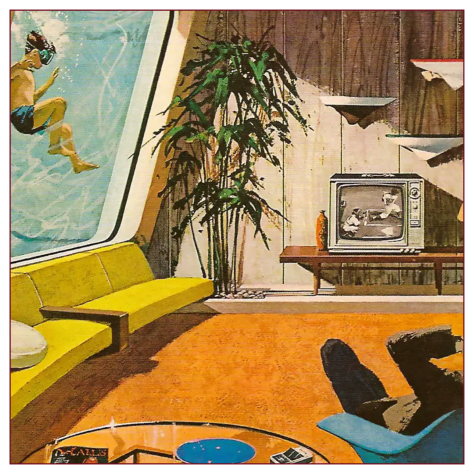
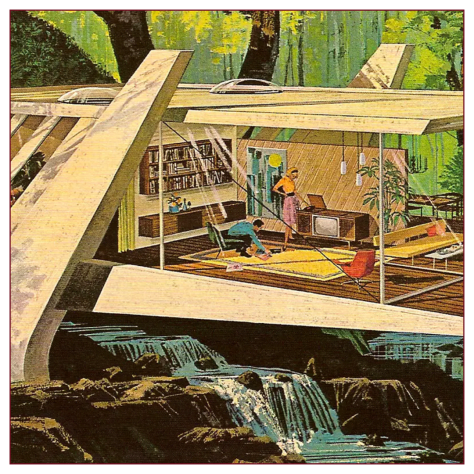
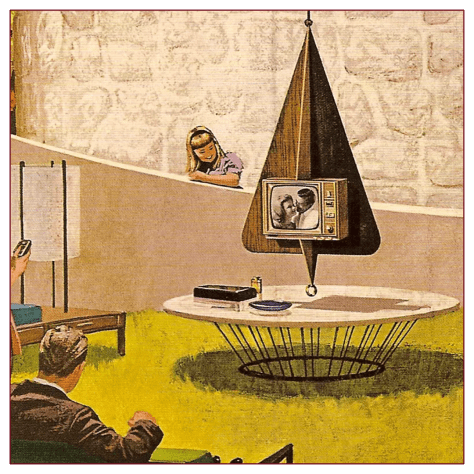
See all of the images - I’m quite obsessed. “Eight years later, Neil Armstrong would say, "One small step for man, one giant leap for mankind," while on the moon.”
“Retro-futurism can be defined as the past's vision of the future, and as seen through the eyes of designers and creatives during the 1950s, 1960s and 1970s. In an extreme sense, this imagination includes flying cars, ray guns and a kind of beautiful, global lifestyle. But retro-futurism can also be as subtle as the triangular bodice on Jane Jetson's Pierre Martian score” -
Retro-futurism in fashion is synonymous with , an iconic designer who helped to usher in the Space Age aesthetic in the 60s. He famously said “The clothes that I prefer are those I invent for a life that doesn’t exist yet – the world of tomorrow”. I was lucky enough to see an exhibit of his work at SCAD Fashion in college (perhaps this is where the retro-futurism seeds were planted in my head and began to move to my subconscious). I think I’ve just decided Cardin is one of the 5 people living or dead that I would like to have dinner with - and I’d like for that dinner to take place at his Bubble Palace. His Cosmocorps collections and many of his works relied heavily on geometric shapes, particularly circles, and drew inspiration from space travel and Art Deco aesthetics.
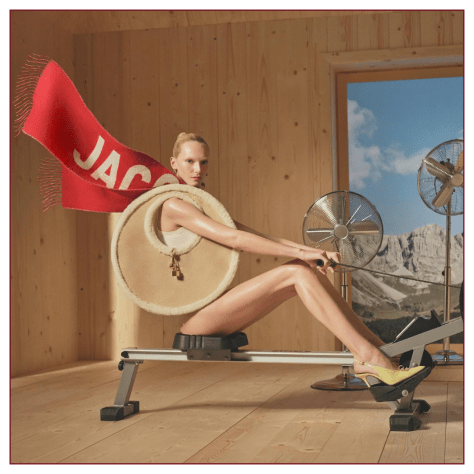
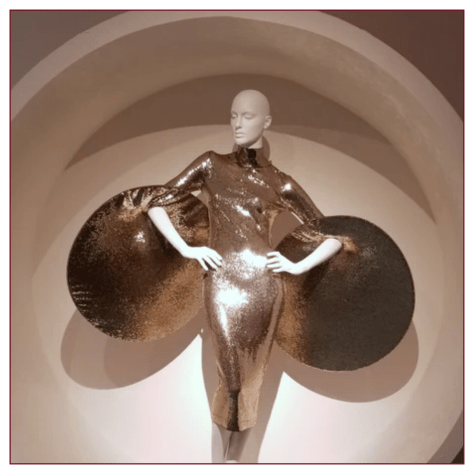

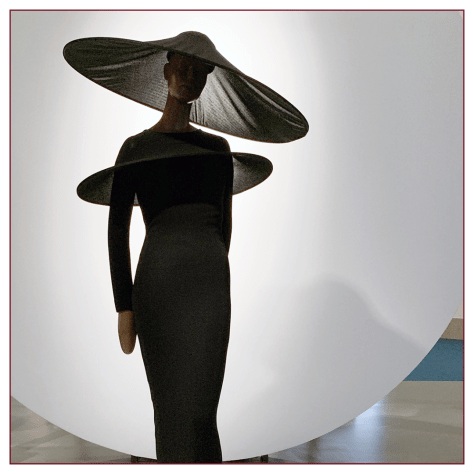

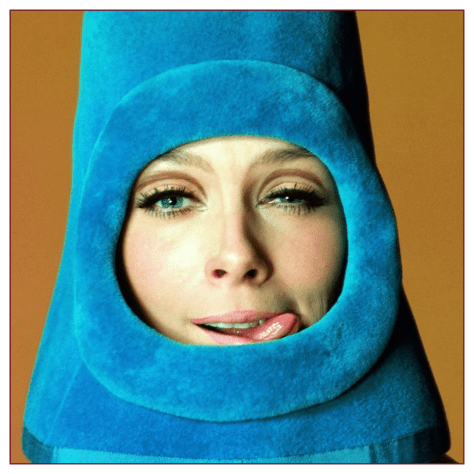
“His patent leather go-go boots and two-tone A-line minidresses are masterpieces of lighthearted science fiction, radiating a distinctly 60s innocent confidence in the future as a benign and groovy place” -
If you’ve read any of my recent posts, you know I believe that the 1960s are going to over the next couple of years. Culturally and politically, we’re primed for a resurgence of many of the same ideals and aesthetic movements that characterized the 60s. While the retro-futurism of the 1960s was largely influenced by a sense of hopefulness for the future, our current fascination with this time period is born from desperation.
The 60s saw an abundance of scientific innovations in areas key to the science fiction genre such as space exploration and nuclear power / nuclear weapons. At the same time, of science fiction saw a shift in focus from physical sciences to more psychological and social sciences, “concerned with exploration and experimentation of the ‘inner space’ as opposed to ‘outer space’” (but also still outer space). This era was influenced by political unrest as well as social movements like sexual liberation, women’s rights efforts, and environmentalism. Here in 2026, we’re dealing with many of the same sort of conflicts and thematics. Present day technological advances like the normalization of AI are creating some of the most seismic shifts in tech and society that we’ve seen in a while, especially considering the social effects of this particular advancement, and modern speculative science fiction will reflect these changes.
In this fantastic video analysis of over the last 70 years, we see that social commentary and societal context has become more integral to the genre over time, a pattern I expect will continue.
Subscribe
Leading up to the moon landing in 1969, the allure of the Space Race influenced fashion and science fiction media, seen in Space Age dressing from designers like Cardin, as well as and , and familiar TV shows like Star Trek and .
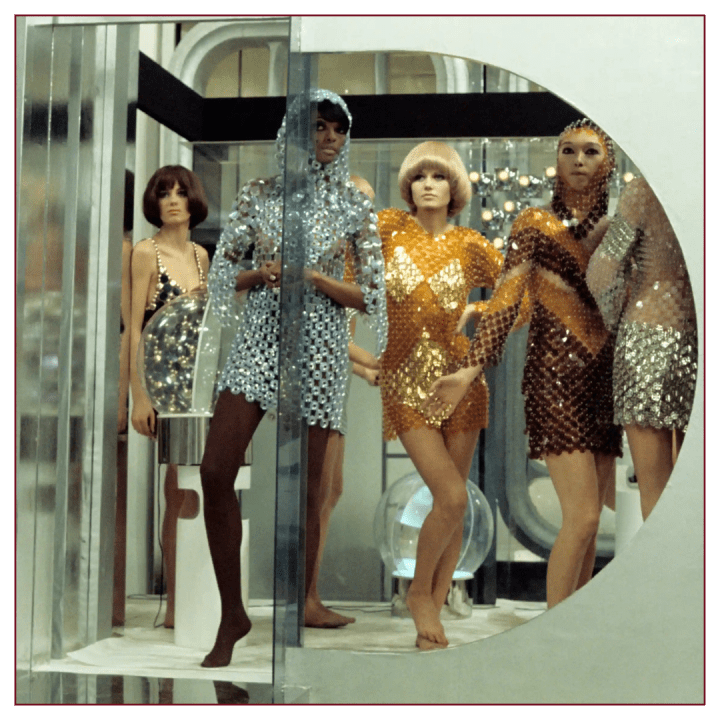
“For many designers, the space race meant experimentation. Spanish designer Paco Rabanne was no different, fashioning mini shift dresses and matching headgear out of unusual materials like chain mail. Rabanne’s now notorious chain-mail creations made his models look like extraterrestrial warriors – dressed in body armor that was equal parts 16th-century knight and futuristic dancer” -
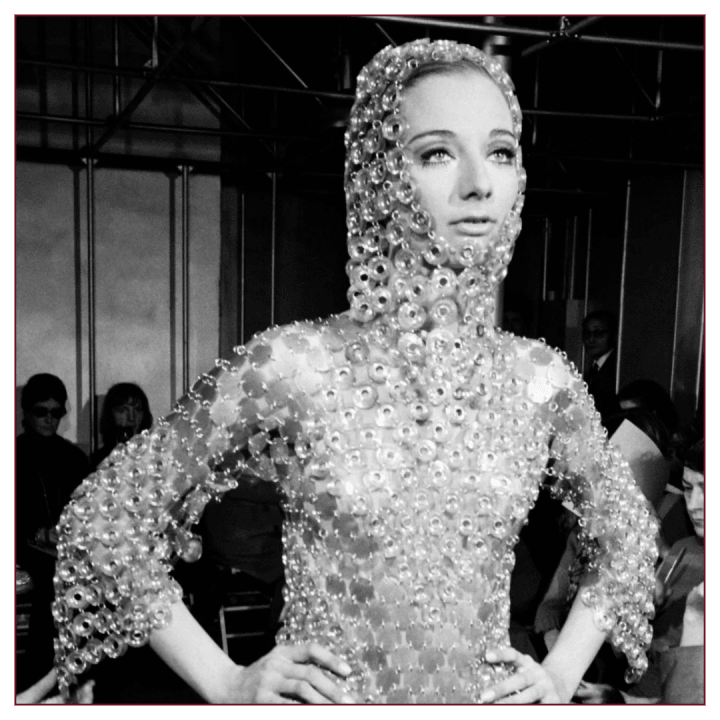


As we enter the , dubbed the “commercial era”, it’s clear that this go around is characterized by a much more unsettling outlook.
“Olivia Rodrigo recently said that anyone who wants to go to space is a red flag. Fair enough. But when you wear rose-colored glasses, red flags are just flags. So go ahead, rocket away! The future of fashion isn’t about looking to the stars, but about going to them” -
Similar to the nuclear apocalypse spurred on by extremist late-stage capitalism in retro-futuristic video game and show , the presence of corporate greed is decimating our planet and threatens an ever-looming apocalypse of our own (more on this next time). Rather than feeling buoyed by a lighthearted positivity for the future and the galactic prospects it once held, we’re both yearning for that time when optimism for the future still and coming to terms with the fact that our own future has been thrown into certain uncertainty. When we hear of space travel today, it’s usually tied to a billionaire’s bank account, exploiting space for tourism or as an escapist last resort attainable only for the 1%. Nothing more American than colonialism, after all.
“From biotechnology to geoengineering, from unmanned drones to internet surveillance, the democratic promise of technology has been transmuted into an authoritarian threat… I think it is precisely this fear of the future, this sense of a looming apocalypse, this feeling that we have unleashed a monster that is now beyond our control, that has given rise to the latest outburst about the colonization of other worlds” -
After this month’s Golden Globes awards, NYT’s Senior Fashion Critic Vanessa Friedman wrote about “The Worst Golden Globes Fashion Trend”, which she cites as “retro classicism”, saying “enough with the retro throwback nostalgia”. I thought this was a harsh and overly simplified perspective, though I of course agree with her assertion that it’s related to the upcoming inauguration - sartorial regression alongside the political. “Besides, when you aren’t sure what’s coming, it’s safest to retreat to the surety of the past, especially when bathed in the soft-focus glow of the dream machine.”
As our culture continues to romanticize these elements of the past and their vision of the future, I have no doubt that we’ll continue to see related aesthetics springing up left and right. We’re already seeing the emergence of 60s inspired , , , and more. Perhaps we’ll see a surge in the popularity of the pillbox hat or a runway collection that speculates what the uber-wealthy would wear on a still undiscovered but environmentally inhospitable planet. Today’s projections of futuristic fashion will likely include ultra-smart fabrics that are not yet possible, prioritizing performance and seamless tech integrations that enhance the body’s performance or adapt to adverse surroundings. Media will certainly continue to speculate on the future and iterations of , defining what may be looked back at one day as our own retro-futuristic daydreams. I’m sure we’ll see more entertainment centered around the existence of a multiverse, a concept that I think people find appealing as they struggle to accept our version of reality.
And if you’re starting to feel like you’ve seen this film before, I’ll leave you with this poignant reflection on a time that feels all too familiar 8 years later.
“The year 2017 was a monumental chapter in American history, and not just for outlandish fashion. It was the year of a turbulent inauguration that would split parties for years to come, wildfires roared at a rate never seen before, and rising ocean temperatures caused the trillion–ton Larsen Ice shelf to break off. America yearned for a future wildly different from what we were experiencing, and just as it came half a century ago, Space Age fashion emerged from the shadows as a plea for a better, more progressive tomorrow. With a fire that has only grown across our natural world, it's no wonder that we are looking to the stars for hope”
In reality, didn’t we all grow up on science fiction? The Hunger Games became more relevant to our world than 12 year old me ever thought it would be, and it (+ The Uglies) provided context for dystopian aesthetics and class-driven conflict from a young age
Sometimes this is a byproduct of the time period + inability to see the future, and sometimes it is an aesthetic choice
Begging you to read this with Rabanne - it’s the most entertaining thing I’ve seen on the internet in a while
“Rabanne … that chainmail represented “a moment when women emerged to be warriors because they needed to affirm their desire of emancipation, freedom, and liberty. The armour was almost necessary.” - . This is interesting, especially when you consider these quotes from Cardin + Courreges:
Cardin states, “My way was to draw something of the future—to be young, to see that a woman could be free. I wanted to give women in the 1960s a chance to work, to sit, to take the car and drive in my dresses.”
Courrèges biggest achievement — his insistence on making women comfortable. He emphasized that “a woman’s body must be hard and free, not soft and harnessed.” The designer favored flats and A-line silhouette-shaped dresses that were meant to be worn without a bra.
Unsurprising to see some of these ideas coming back into fashion as women face the greatest erosion of our rights since many were established in the 60s and 70s
I watched the entire first season in one day a couple weekends ago while working on some cross stitching (balance). I had just written about the return of jello salads, so I was kicking my feet when I saw the many jello mold references in Fallout
https://halifaxbloggers.ca/entertainment/2026/07/our-wrong-timeline-retro-futurism-and-retro-presentism/
26104SharePreviousNext
